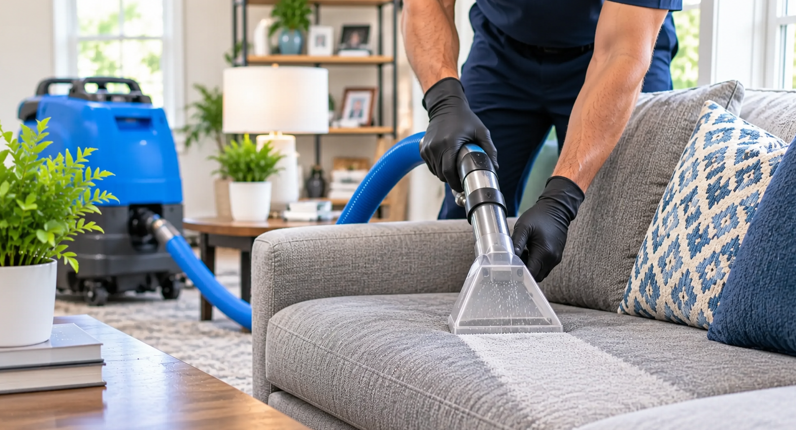

Furniture absorbs dust, body oils, food particles, pet hair and everyday grime. Sofas, armchairs, dining chairs and fabric headboards can gradually lose their original appearance, even when they are vacuumed regularly. Professional upholstery cleaners use specialised equipment and fabric-safe methods to remove accumulated dirt, address stains and maintain the condition of upholstered furniture. Knowing how these cleaning methods work helps homeowners and businesses make better decisions about furniture care.
Why Upholstered Furniture Needs Regular Cleaning
Upholstered furniture has a porous surface that can trap particles beneath the visible fabric. Ordinary dusting and vacuuming remove loose debris, but they may not reach dirt embedded deeper within the material.
Over time, neglected upholstery can develop several problems:
- Persistent odours: Sweat, food spills, pet accidents and moisture can leave unpleasant smells in fabric.
- Visible discolouration: Body oils and repeated contact can create darker patches on armrests, cushions and headrests.
- Dust accumulation: Fine particles settle between fibres and may circulate when someone sits down or moves the cushions.
- Stubborn stains: Coffee, tea, ink and food spills can become harder to remove as they dry.
- Fabric deterioration: Abrasive dirt particles can contribute to fibre wear through repeated friction.
Regular maintenance helps reduce these problems and keeps furniture more presentable. Homes with children, pets or frequent visitors may need more frequent attention than properties with occasional furniture use.
How Professional Upholstery Cleaners Assess Different Fabrics
Not every upholstery material can withstand the same cleaning treatment. A method suitable for synthetic fabric may damage delicate natural fibres or cause colour bleeding in untreated materials.
Professional technicians generally begin by identifying the fabric type, examining its condition and checking the manufacturer’s cleaning instructions. Common upholstery materials include:
Cotton and linen: These natural fibres can absorb moisture quickly. Excessive water may cause shrinkage, colour changes or uneven drying.
Polyester: This synthetic material is generally durable and resistant to many common stains, although oils can cling to its fibres.
Microfibre: Its tightly woven structure can resist some surface spills, but incorrect cleaning products may leave marks or affect its texture.
Wool: Wool requires careful treatment because high temperatures, harsh chemicals and excessive moisture can damage its fibres.
Velvet: Its distinctive pile needs gentle handling to prevent flattening, streaking or changes in texture.
Fabric identification is essential before selecting a cleaning solution. A technician should also test the chosen product on a small, inconspicuous area before treating the entire furniture surface.
Cleaning Methods Used for Sofas and Other Furniture
Professional upholstery maintenance involves several techniques. The appropriate option depends on the fabric, level of soiling, stain type and manufacturer’s recommendations.
Hot Water Extraction
Hot water extraction uses a specialised machine to apply a controlled amount of cleaning solution before extracting moisture and loosened dirt. It can be effective for heavily soiled synthetic upholstery and other fabrics approved for this method.
The technician adjusts water temperature, pressure and extraction settings according to the material. Proper extraction is essential because excessive moisture can prolong drying and create problems within the furniture padding.
Low-Moisture Cleaning
Low-moisture techniques use smaller quantities of liquid to clean suitable fabrics. They are useful for furniture that cannot tolerate heavy moisture or needs a shorter drying period.
These methods may involve specialised cleaning compounds, controlled agitation and extraction equipment. They can help remove surface contamination without saturating the upholstery.
Dry Upholstery Cleaning
Dry cleaning methods use specialised compounds designed to absorb dirt and oils. The compound is worked into the fabric and removed through vacuuming or other manufacturer-approved techniques.
This approach can be appropriate for moisture-sensitive materials, although the suitability depends on the product and fabric specifications.
Spot and Stain Treatment
Individual stains often need separate treatment. Coffee, grease, ink and pet-related marks have different chemical properties, so one cleaning product may not work for every spill.
Professional technicians identify the likely stain type and choose a compatible treatment. Attempting to scrub a stain aggressively can spread the mark or push it deeper into the fibres.
Why Houston Properties Need a Practical Furniture Cleaning Schedule
Houston homes and commercial properties experience a combination of everyday dust, humidity, frequent furniture use and occasional spills. These conditions can make upholstery maintenance particularly relevant.
Homeowners searching for upholstery cleaning in Houston services should consider the type of furniture they own, the amount of daily use and any specific fabric care requirements.
Humidity also deserves attention. Upholstery that remains damp for extended periods may develop unpleasant odours and moisture-related problems. Proper extraction, suitable drying conditions and adequate ventilation help reduce these risks.
A practical cleaning schedule might include:
- Vacuuming sofas and chairs weekly to remove loose dust and debris.
- Cleaning spills promptly using fabric-approved instructions.
- Checking armrests, headrests and cushion edges for accumulated oils.
- Scheduling professional cleaning when visible soiling develops.
- Inspecting furniture after pet accidents or significant liquid spills.
Furniture in reception areas, waiting rooms and shared office spaces may require more frequent maintenance because of constant contact with different users.
Caring for Sofas Without Damaging the Fabric
Sofas often receive more daily use than other upholstered furniture. Food crumbs, pet hair, spilled drinks and body oils can accumulate around cushions, seams and armrests.
A professional sofa cleaning in Houston appointment can address contamination that ordinary household cleaning may not remove. Technicians can also identify areas requiring additional treatment, such as heavily used seat cushions or visible staining around the edges.
Between professional appointments, homeowners can maintain their sofas through a few simple habits:
- Remove loose cushions and vacuum underneath them.
- Use an upholstery attachment rather than a hard vacuum nozzle.
- Rotate reversible cushions to distribute everyday wear.
- Blot fresh spills with a clean, absorbent cloth instead of rubbing.
- Follow the furniture manufacturer’s instructions before applying any cleaning product.
Removable covers should only be machine-washed when the care label permits it. Incorrect washing temperatures or drying methods can cause shrinkage and make the covers difficult to refit.
What to Check Before Hiring a Cleaning Company
Choosing a furniture cleaning provider requires more than comparing advertised prices. The quality of the assessment, cleaning method and aftercare instructions can affect the final result.
Customers comparing upholstery cleaning in Houston TX providers should examine several practical details.
Fabric knowledge: Ask whether technicians have experience with the specific upholstery material. Delicate fabrics need different treatment from durable synthetic blends.
Cleaning process: A reliable provider should explain the proposed method, including pre-treatment, stain removal and moisture extraction.
Product safety: Ask which cleaning agents will be used and whether they are suitable for the fabric and household environment.
Drying expectations: Request an estimated drying period. Actual drying time depends on humidity, airflow, fabric thickness and the cleaning technique.
Pricing clarity: Obtain a quote that explains whether the service includes stain treatment, deodorising, cushion cleaning and additional charges.
Insurance and experience: Check whether the business has appropriate insurance and trained technicians who understand furniture care.
A company that inspects the furniture before quoting is generally better positioned to recommend an appropriate treatment than one offering the same process for every material.
When Steam Cleaning Is Suitable
Many customers associate deep furniture cleaning with steam-based equipment. However, actual steam treatment is not appropriate for every upholstery fabric.
Some providers offering steam cleaning services use hot water extraction systems, which apply heated cleaning solutions and remove them through suction. This differs from applying high-temperature steam directly to a surface.
The distinction matters because excessive heat and moisture can affect delicate fibres, adhesives, dyes and furniture padding.
Before booking a steam-based treatment, customers should confirm:
- Whether the furniture manufacturer permits heat-based cleaning.
- Whether the fabric can tolerate the proposed temperature.
- How much moisture the equipment introduces.
- Whether the technician has experience with similar materials.
- What drying arrangements are recommended.
Professional assessment helps prevent avoidable damage and ensures the cleaning process suits the furniture.
Maintaining Results After Professional Treatment
Furniture care should continue after a cleaning appointment. Good maintenance habits can reduce the rate at which dirt accumulates and help preserve the appearance of the fabric.
Keep furniture away from direct sunlight where practical, as prolonged exposure can fade certain upholstery materials. Use washable throws on frequently used seating areas and vacuum regularly to remove loose particles.
For households with pets, brushing animals regularly and keeping their bedding clean can reduce the amount of hair transferred to sofas and chairs.
Businesses should establish a furniture maintenance schedule based on occupancy and usage. Reception seating, restaurant booths and office chairs may need more attention than furniture in rarely used rooms.
Professional upholstery cleaning services can form part of a wider property maintenance plan, helping businesses maintain cleaner waiting areas, meeting rooms and customer-facing spaces.
Keeping Furniture in Better Condition for Longer
Upholstered furniture represents a significant investment for many households and businesses. Regular vacuuming, prompt spill treatment and appropriate professional cleaning can help prevent accumulated dirt from affecting its appearance and condition.
The most suitable cleaning method depends on the fabric, the type of contamination and the manufacturer’s care instructions. A qualified technician should assess these factors before choosing equipment or applying cleaning products. Careful treatment and consistent maintenance can help furniture remain comfortable, hygienic and presentable for years.