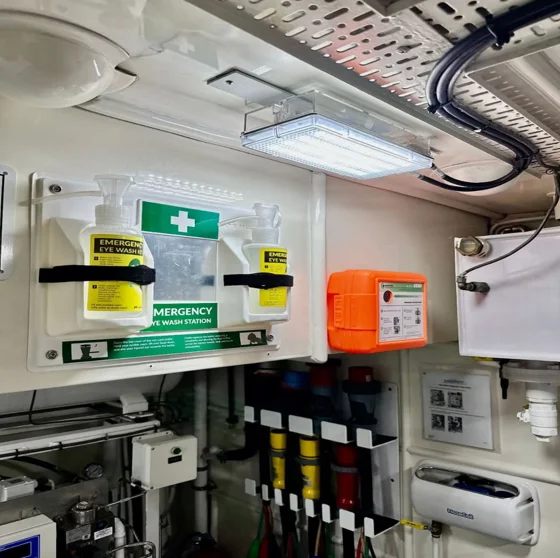

The engine room is one of the most demanding working areas on a vessel. It contains machinery, electrical systems, fuel lines, pumps, filters, ventilation equipment, and other components that require regular attention. Crew members and marine technicians often work in confined spaces where access is restricted and natural light is limited.
Proper engine room lighting helps make inspections, repairs, and routine maintenance safer. It allows personnel to identify equipment, read instruments, recognise leaks, and work around moving machinery with greater awareness. Installing reliable LED marine engine room lights can improve visibility in confined spaces while providing durable illumination for demanding marine environments.
Lighting should be selected according to the operating conditions of the vessel. Marine engine rooms experience heat, vibration, moisture, oil contamination, and occasional exposure to fuel vapours. Ordinary household fixtures may not be suitable for these conditions.
Clear Visibility Helps Identify Mechanical Problems
Many engine room problems begin with small warning signs. A loose connection, fluid leak, damaged hose, or unusual wear pattern may be difficult to recognise without sufficient illumination.
Poor lighting can make these issues harder to detect. Shadows may hide damage, while insufficient brightness can make it difficult to read labels, gauges, and warning indicators.
Well-positioned lighting helps technicians inspect machinery from different angles. It also makes it easier to identify the source of a problem rather than relying on touch in areas where hot or moving components may be present.
Consistent illumination is particularly useful during routine checks because it allows crew members to compare the condition of equipment over time.
Choosing Suitable Marine LED Fixtures
LED technology is widely used in marine engine rooms because it offers efficient illumination and a long operating life.
Compared with many traditional bulbs, LEDs consume less electrical power and produce less heat. This is beneficial in enclosed machinery spaces where ventilation and temperature management are already important considerations.
LED fixtures are available in different shapes and mounting styles. Slimline lights can fit beneath shelves and along bulkheads, while enclosed fixtures can provide general illumination across larger sections of the compartment.
Buyers should examine product specifications carefully. Marine engine room lights need appropriate protection against moisture, vibration, heat, and exposure to oils or other contaminants.
A fixture’s environmental rating should match its actual installation location.
Reducing Shadows Around Machinery
Engine rooms contain pipes, brackets, hoses, filters, and large machinery components that can create shadows. A single overhead fixture may leave important working areas poorly illuminated.
Using several smaller lights can provide more consistent coverage. Fixtures can be positioned along bulkheads, above work areas, and near inspection points.
The aim is to reduce dark areas without creating unnecessary glare. Lights should be arranged so that personnel can see equipment clearly from the positions where maintenance tasks are normally performed.
Diffused lighting can help spread illumination across a wider area. Directional fixtures are useful for locations where technicians need focused visibility.
Improving Safety During Emergency Repairs
Mechanical problems do not always occur during daylight or while a vessel is alongside a dock. Crew members may need to investigate an issue during nighttime operations or in difficult weather conditions.
Dependable engine room lighting helps personnel locate valves, switches, emergency equipment, and access routes.
Emergency lighting deserves separate consideration. A vessel’s normal electrical supply may become unavailable during a fault, so essential areas should have suitable backup illumination.
Depending on the vessel’s design and applicable regulations, emergency lighting may include independent battery-powered fixtures or lighting connected to a protected emergency power source.
Crew members should know where emergency lights are located and how to check their operation.
Protecting Fixtures From Heat and Vibration
Marine engines generate significant heat, and machinery spaces can expose lighting equipment to demanding temperatures. Vibration from engines and generators can also affect electrical connections and mounting hardware.
Fixtures should be selected according to the temperature range specified by the manufacturer. Installing a product beyond its rated operating conditions can shorten its lifespan or create electrical problems.
Secure mounting is equally important. Loose fixtures may move during vessel operation and could become damaged or interfere with nearby equipment.
Marine-grade connectors, suitable cable protection, and vibration-resistant mounting arrangements help support dependable performance.
Regular inspections should include checking brackets, wiring insulation, electrical terminals, and lens condition.
Supporting Accurate Maintenance Work
Engine room maintenance often involves reading small markings, inspecting fluid levels, checking electrical terminals, and following equipment manuals.
Poor lighting can increase the likelihood of mistakes during these tasks. A technician may misread a label, overlook a warning indicator, or fail to notice a small leak.
Adequate general lighting combined with portable inspection lights provides greater flexibility. Handheld or rechargeable work lights can be directed towards difficult-to-reach areas.
Portable lights should be suitable for the environment in which they will be used. Equipment used around fuel systems or potentially flammable atmospheres must meet the relevant hazardous-area requirements.
Ordinary LED work lights should never be assumed safe for every engine room location.
Understanding Electrical and Fire Safety Requirements
Engine room lighting requires careful attention to electrical safety. Marine electrical systems operate under conditions that differ from ordinary household installations.
Wiring should be appropriately rated, protected against abrasion, and installed away from excessive heat and moving machinery. Connections must be suitable for the vessel’s electrical supply and environmental conditions.
Potentially flammable atmospheres also require special attention. Areas where combustible vapours may be present can require certified explosion-protected or otherwise appropriately rated equipment.
The correct selection depends on the vessel’s classification, machinery arrangement, applicable standards, and risk assessment.
Qualified marine electricians should handle installations where electrical faults could create a fire, shock, or explosion hazard.
Using Task Lighting Alongside General Illumination
General engine room lighting provides overall visibility, but certain jobs require additional focused illumination.
Task lights can be installed near frequently inspected machinery, filter assemblies, electrical panels, and maintenance benches. They allow technicians to direct light towards the work without increasing brightness throughout the compartment.
Adjustable fixtures are useful where the same space is used for different maintenance activities.
However, portable cables and work lights should be arranged carefully to avoid creating trip hazards or interfering with machinery. Equipment should be removed or secured after maintenance work is completed.
Establishing a Regular Inspection Routine
Lighting equipment should be included in the vessel’s maintenance schedule. Even well-made fixtures can become damaged through vibration, contamination, or prolonged exposure to heat.
A basic inspection should include:
- Checking that all installed lights operate correctly.
- Cleaning lenses to remove oil, dust, and residue.
- Inspecting cable insulation and electrical connections.
- Checking mounting brackets for movement or corrosion.
- Testing backup and emergency lighting systems.
- Replacing damaged fixtures with suitable marine-rated products.
Keeping a record of inspections can help identify recurring failures and determine whether certain fixtures need repositioning or replacement.
Better Working Conditions for Marine Crews
Engine room lighting affects more than visibility during repairs. It also influences how comfortably personnel can complete inspections and routine duties.
A well-lit machinery space is easier to work in, particularly during long operating periods. Clear visibility can reduce unnecessary movement, make equipment identification easier, and support more organised maintenance practices.
Proper lighting does not replace training, protective equipment, ventilation, or machinery safety procedures. It forms part of the wider arrangements needed to maintain safe working conditions aboard a vessel.
Selecting suitable marine fixtures, positioning them carefully, and inspecting them regularly helps create an engine room where personnel can carry out their responsibilities with greater confidence.