
An entrance door is one of the most frequently used parts of a property. It provides access, contributes to security, and forms a major part of the building’s exterior appearance. A suitable entrance door must therefore withstand regular use and environmental exposure while maintaining its appearance over time.
Aluminum entrance doors meet many of these requirements through a combination of structural strength, corrosion resistance, and design flexibility. Available in different colours, configurations, and finishes, they can complement both traditional and contemporary properties.
Their relatively low maintenance requirements also make them an appealing choice for homeowners planning long-term improvements.
Strength and Structural Reliability
Aluminum has a favourable strength-to-weight ratio, allowing manufacturers to produce sturdy door frames without relying on excessively heavy components.
This characteristic is particularly useful for larger entrance doors. Wide panels and contemporary glazed designs require frames that can support their weight while maintaining proper alignment.
Aluminum profiles can be engineered with internal reinforcement to accommodate different door dimensions and hardware requirements.
The overall strength of a door depends on more than its frame material. Panel construction, locking points, hinges, fixings, and installation quality all contribute to its performance.
Homeowners should therefore review the complete door specification rather than judging durability by appearance alone.
Resistance to Corrosion and Environmental Exposure
Exterior doors experience regular exposure to sunlight, moisture, dust, and changing temperatures. Materials that cannot withstand these conditions may deteriorate or require frequent maintenance.
Aluminum naturally develops a protective oxide layer when exposed to air. This helps it resist corrosion under normal conditions.
Modern aluminum entrance doors can also receive powder-coated or anodised finishes that provide additional surface protection and a consistent appearance.
These finishes are available in different colours and textures, helping homeowners coordinate their entrance doors with other exterior elements.
Properties near coastal areas may require particular attention to material grade, coating quality, hardware selection, and maintenance because salt exposure can affect metal components over time.
Low Maintenance Requirements
One of the practical benefits of aluminum entrance doors is their relatively simple maintenance routine.
Timber doors may need periodic sanding, sealing, or repainting to protect them from moisture and sunlight. Aluminum generally does not require the same level of surface treatment.
Regular cleaning with mild soap and water is usually sufficient to remove dirt and environmental deposits. Harsh chemicals and abrasive cleaning materials should be avoided because they can damage protective finishes.
Moving components also need attention. Hinges, handles, locks, and seals should be checked periodically to identify wear or alignment problems.
This straightforward maintenance routine can make aluminum a convenient material for busy households and commercial properties.
Design Flexibility for Different Architectural Styles
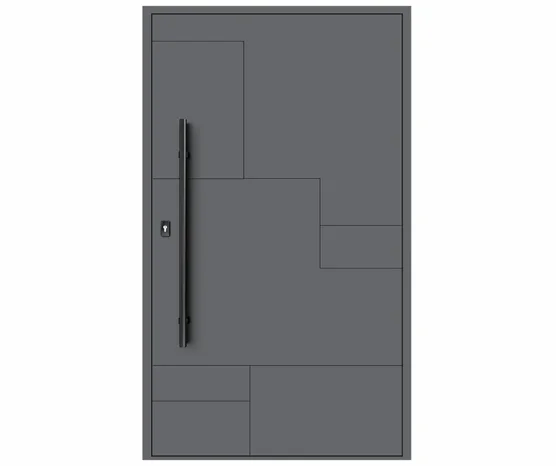
Aluminum entrance doors are available in a wide range of designs, from simple solid panels to large glazed configurations.
Minimalist properties often feature clean lines, slim profiles, and neutral colours such as black, white, and grey. These designs work well with contemporary facades, rendered walls, and modern exterior cladding.
For homes with a more traditional appearance, aluminum doors can incorporate decorative panels, textured finishes, and wood-effect surfaces.
Glazing provides another design option. Glass inserts can introduce natural light into entrance areas while adding visual interest to the door.
The type of glass should be selected according to privacy, security, and energy-efficiency requirements. Laminated or other suitable security glazing may be appropriate for exposed entrance locations.
Improving Home Security
An entrance door is a major component of a property’s security system.
Aluminum doors can accommodate multipoint locking systems, reinforced hinges, secure cylinders, and additional locking hardware. These features help distribute locking pressure across different points of the frame.
The security performance of the complete installation depends on how the door, frame, locks, and surrounding structure work together.
Homeowners should look for suitable security ratings or independently tested products where available. The quality of the locking cylinder and resistance to forced entry should also be considered.
Smart locking systems may provide additional access management through keypads, fingerprint readers, or mobile applications. Their compatibility with the selected door should be confirmed before purchase.
Thermal Insulation and Indoor Comfort
A poorly insulated entrance door can contribute to unwanted heat transfer and draughts.
Modern aluminum door systems can incorporate thermal breaks within the frame. These insulating barriers reduce the direct movement of heat between the external and internal sections of the metal profile.
Insulated door panels, double glazing, and properly fitted perimeter seals can further improve thermal performance.
The effectiveness of the finished installation depends on the complete specification, including the door’s U-value, glass performance, frame design, and fitting quality.
In colder regions, these features can help limit heat loss. In warmer climates, suitable glazing and insulation can help reduce unwanted heat entering the property.
Suitable for Residential and Commercial Buildings
The versatility of aluminum entrance doors makes them appropriate for several property types.
Private homes may use them for main entrances, side entrances, or access points connecting indoor and outdoor areas.
Commercial properties can benefit from aluminum’s structural characteristics and clean appearance. Offices, retail spaces, and other business premises often require entrance systems that can withstand regular operation while maintaining a professional exterior.
Larger commercial installations may require specific hardware, accessibility features, and compliance with building regulations.
The intended use should guide the selection of the door system, particularly where foot traffic is frequent.
The Importance of Accurate Measurements and Installation
Even a well-manufactured aluminum door may perform poorly if it is installed incorrectly.
The opening must be measured accurately, including its width, height, depth, and alignment. Installers should check the surrounding structure and ensure that the frame is securely fixed.
Correct alignment allows hinges and locking mechanisms to operate without unnecessary pressure. Suitable weather seals help reduce air and water infiltration.
Homeowners should also consider the direction of opening, threshold height, handle position, and clearance requirements.
Professional installation can reduce the likelihood of operational issues and help the door achieve its intended performance.
Long-Term Value and Cost Considerations
The initial purchase price is only one part of the overall cost of an entrance door.
Homeowners should consider the expected maintenance requirements, product warranty, hardware quality, insulation performance, and service life.
A lower-priced door may not provide the same level of security or thermal performance as a more carefully specified product. Similarly, premium finishes and specialist hardware may increase the initial investment but provide benefits that suit the property’s requirements.
Comparing complete specifications helps buyers make a more informed decision.
A Lasting Choice for Property Entrances
Aluminum entrance doors offer a useful combination of durability, low maintenance, security options, and architectural flexibility. Their ability to accommodate different finishes, glazing arrangements, and locking systems makes them suitable for a broad range of properties.
A carefully selected door, supported by quality installation and regular maintenance, can remain functional and visually appealing for many years. For homeowners planning an entrance upgrade, aluminum is a material worth considering for both practical and aesthetic reasons.