
A single workout can ask a lot of one pair of shoes. A session might open with heavy squats, move to box jumps, add a rope climb, and finish with an 800 m run. Shoes built for only one of those jobs fail at the others: running shoes wobble under a barbell, and rigid lifting shoes make sprints awkward. A good pair of cross training shoes is designed to cover all of it, and the details below show how to pick one that does.
Start With Your Weekly Mix
Before looking at any product page, write down what a typical week of training includes. Count the sessions that involve heavy lifting, the ones built around jumping and conditioning, and any running, however short.
A lifter who squats three times a week and runs once a fortnight needs more stability than flexibility. Someone who does high-rep circuits, skipping and sprint intervals needs the opposite balance. Most people land somewhere between the two, and that middle ground is exactly where a cross-trainer earns its place.
Be realistic about the running part. Cross-trainers handle short efforts well, such as a 400 m warm-up, sprint repeats or the run segments in a conditioning workout. They are not built for 10 km road runs, where extra cushioning matters.
See also: How Technology Is Supporting Better Financial Decisions
Look at the Sole First
The sole decides most of how a shoe performs, so it deserves the closest inspection.
For lifting, the base should feel firm and flat. A sole that compresses easily under load makes squats and deadlifts feel unstable, because the foot sinks before the force reaches the floor. For jumping and sprinting, the forefoot needs some flex so the toes can bend naturally at push-off.
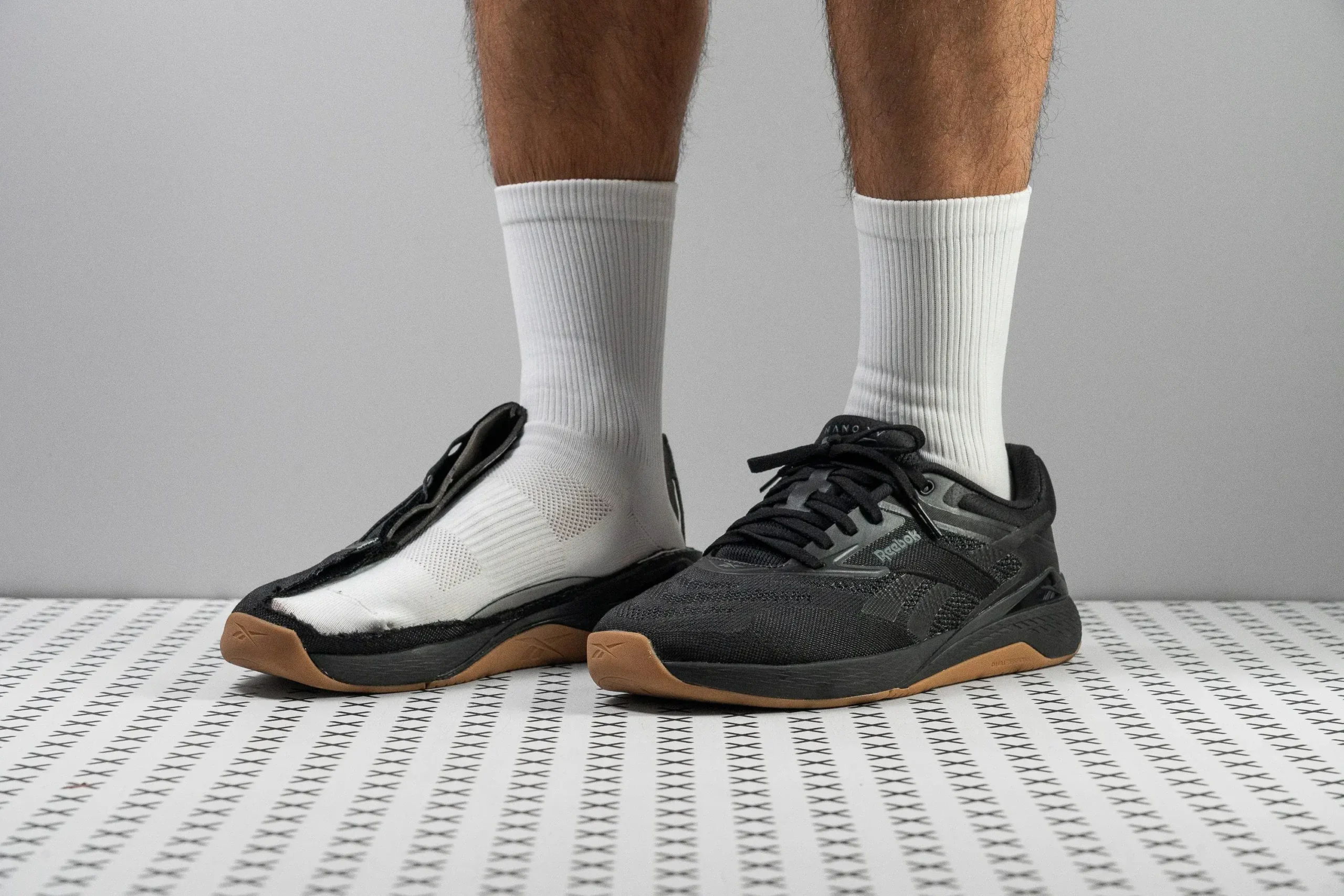
Good cross-trainers manage both by using a dense heel and a more flexible front section. Press your thumb into the heel of a shoe in store, or check the product description for terms like firm midsole or stable heel. Then bend the shoe at the ball of the foot. It should fold there without resisting, while the heel stays solid.
Heel height is worth checking too. Most cross-trainers have a low or moderate drop. A very high heel helps squat depth but makes running feel off-balance, while a flat profile suits deadlifts and sprints. A modest drop is the practical compromise.
Grip and Tread Pattern
Traction matters more than people expect. Gym floors, rubber mats, turf and concrete all behave differently, and a sole that grips one may slide on another.
Look for a tread pattern with enough bite for lateral movement, since cross-training involves side-to-side steps, shuffles and quick direction changes. Deep, aggressive lugs designed for trails usually catch on gym flooring, so a pattern with moderate, even coverage works better.
If your sessions include rope climbs, check the sidewalls. Many cross-trainers add a reinforced wrap around the midsole so the shoe can grip a rope between the feet without tearing.
Upper Materials and Durability
Training shoes take more abuse than most footwear. Rope burns, floor scrapes and heavy lateral loading wear out soft materials quickly.
A good upper balances breathability with toughness. Fully knitted uppers breathe well but can stretch and fray at the edges. Reinforced mesh with overlays handles abrasion better and keeps its shape under lateral force. Check the toe area and the inner midfoot, which take the most punishment from rope work and burpees.
Ventilation matters for comfort during long sessions. A stiff, sealed upper traps heat, so look for panels that let air through without sacrificing support around the heel and midfoot.
Get the Fit Right
A cross-training shoe has to hold the foot securely for lifting while leaving room for movement during jumps and runs.
Measure your feet in the evening, when they are slightly larger, and compare the length to the brand’s size chart instead of assuming your usual size carries across brands. The heel should stay put when you rise onto your toes, with no slipping. The toes should have room to spread, since a cramped forefoot makes jumping uncomfortable and can cause blisters on runs.
A snug midfoot matters for lifting. Laces or a strap that pull the arch area in keep the foot from sliding during heavy sets. Test the shoe with the socks you train in, and try a few jumps or a short jog if the store allows it.
Read reviews for sizing comments. If several buyers report a narrow toe box or a half-size difference, adjust your order.
Test the Shoe in Real Movements
Standing in a shoe tells you little. Test it in the actions you will perform.
Do a bodyweight squat and watch for heel lift. Step side to side to check lateral stability, then hop a few times to see how the forefoot feels on landing. If possible, jog for a minute or two. A shoe that feels stiff, noisy or unstable in any of these movements will probably annoy you after a month of training.
When buying online, check the return policy before ordering. Many retailers allow indoor trials on clean floors as long as the shoes stay unworn outdoors. Use that window to run through a short test workout, including lifts, jumps and a brief run.
Match the Shoe to the Level of Training
Newer athletes do not need specialist features. A flat, firm, well-fitting trainer covers the basics while you build technique and strength. As loads climb and sessions get more varied, features like a reinforced rope guard, a supportive midfoot and a more durable upper become more valuable.
Once you know what your training demands, the full TYR range makes it easy to compare footwear alongside apparel and accessories in one place. Compare two or three models on sole firmness, heel drop and upper construction before deciding.
Competitive athletes, or anyone who trains five or six days a week, should consider owning two pairs and rotating them. Foam recovers its shape between sessions, and the shoes last longer. It also lets you keep one pair for heavy days and another for conditioning if your programme splits that way.
Care and Replacement
Look after cross-trainers and they will last longer. Let them dry fully after sweaty sessions and avoid leaving them in a hot car or a closed gym bag. Wipe off chalk and dirt, and keep them for training only, since street wear wears the tread and softens the sole faster.
Replace them when the heel collapses, the tread goes smooth or the midsole creases deeply. A shoe in that state no longer gives the stability that lifting needs, and the loss often shows up first as knee or ankle discomfort.
When a Question Remains
If a sizing or product question is still open after reading the specs, you can contact the TYR team before ordering. A short message about your training mix often gets a more useful answer than guessing from a product photo.
Choosing for the Work You Actually Do
The best cross-trainer is the one that matches your own week, with a firm base for the bar, a flexible forefoot for jumps and enough durability to survive the rope and the floor. Test it in real movements, check the fit against your measurements, and buy from a source that accepts returns. Do that, and the shoes will mostly disappear from your attention, which is how a good training shoe should feel.