
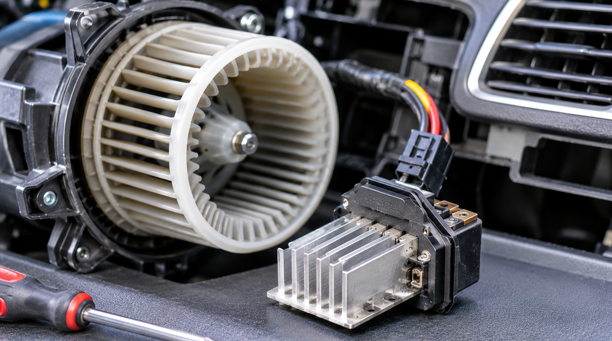

A vehicle’s heating, ventilation and air conditioning (HVAC) system depends on several electrical components to maintain a comfortable cabin temperature. The blower motor moves air through the vents, while its speed control system determines how much air reaches the interior. A blower motor resistor helps regulate this airflow by controlling the electrical power supplied to the blower motor at different speed settings. When this component develops a fault, drivers may notice that certain fan speeds stop working, airflow becomes inconsistent, or the ventilation system operates only at its highest setting.
Understanding how this component works can help vehicle owners recognise early warning signs, avoid unnecessary part replacements and make better repair decisions.
How Does a Blower Motor Resistor Work?
The blower motor resistor is an electrical component that regulates the speed of the cabin blower fan. In many traditional HVAC systems, it controls fan speed by introducing different levels of electrical resistance into the circuit.
At lower fan settings, the resistor reduces the voltage available to the blower motor. This causes the motor to rotate more slowly and produce less airflow. At higher settings, less resistance is applied, allowing more electrical current to reach the motor.
Most conventional resistor assemblies contain several resistance elements. Each fan-speed setting uses a different resistance path to control motor operation. The highest speed often bypasses the resistor and supplies power directly to the motor through a separate circuit.
Newer vehicles may use electronic blower motor controllers instead of traditional resistor assemblies. These systems regulate motor speed through electronic signals rather than relying entirely on fixed resistance elements.
Common Signs of a Faulty Resistor
A failing resistor can affect the ventilation system in several ways. Recognising these symptoms early can help prevent discomfort and reduce the risk of further electrical problems.
1. Some Fan Speeds Stop Working
One of the most common symptoms is the loss of one or more fan-speed settings. For example, the blower may work on the highest setting but fail to operate on the first, second or third setting. This happens because individual resistance elements or their electrical connections may have failed.
2. The Fan Only Works at Maximum Speed
If the ventilation system operates only at its highest speed, the lower-speed resistance circuits may have stopped functioning. Since the highest setting often bypasses the resistor, the fan can continue working even when the resistor assembly is damaged.
3. Inconsistent Airflow
A damaged electrical connection or deteriorating resistance element can cause irregular fan operation. Drivers may notice that airflow changes unexpectedly or that certain speed settings work intermittently.
4. Burning Smell Near the Dashboard
An overheated resistor, damaged wiring or a poor electrical connection can produce a burning smell. This symptom should not be ignored. The HVAC system should be inspected promptly, as excessive heat can damage nearby connectors and wiring insulation.
5. Blower Fan Stops Working
In some cases, a resistor fault can interrupt the electrical supply to the motor at every setting. However, a completely inactive blower can also result from a failed motor, blown fuse, faulty relay, damaged wiring or an HVAC control issue.
What Causes Blower Motor Resistor Failure?
Several factors can contribute to resistor damage. Some are related to normal component wear, while others develop because of problems elsewhere in the ventilation system.
Excessive Heat: Traditional resistors generate heat while regulating electrical current. Poor airflow around the assembly or prolonged operation under excessive electrical load can cause overheating.
Worn Blower Motor: A blower motor with worn bearings or internal damage may draw more current than expected. This places additional stress on the resistor and its electrical connections.
Blocked Cabin Air Filter: A heavily clogged cabin filter can restrict airflow through the HVAC system. Depending on the vehicle’s design, restricted airflow may contribute to increased operating temperatures around the blower assembly.
Damaged Electrical Connectors: Loose terminals, corrosion and deteriorated wiring can create electrical resistance at connection points. These faults may produce heat and eventually damage the resistor or connector housing.
Moisture Exposure: Water entering the HVAC housing can cause corrosion and electrical problems. Vehicles with blocked drainage passages or leaking seals may be particularly vulnerable.
Understanding the Role of a Blower Motor Fan Resistor
A blower motor fan resistor is designed to provide different fan-speed options in HVAC systems that use conventional resistance-based controls. Its resistance values determine how much electrical power reaches the motor at each selected setting.
The component is usually installed close to the blower motor, often within the HVAC housing. This position allows airflow from the ventilation system to help cool the resistor during operation.
Its location and design vary between vehicle manufacturers and models. Some assemblies are accessible from the passenger footwell, while others require the removal of dashboard panels or additional HVAC components.
Modern vehicles may use electronic fan controllers that perform a similar speed-regulation function through semiconductor circuits. These units can have different diagnostic and replacement requirements, so checking the vehicle’s specifications is essential before ordering a replacement part.
How Mechanics Diagnose a Faulty Resistor
Replacing a component without confirming the cause of a problem can lead to repeated repairs. A proper diagnosis should examine the complete blower motor circuit.
Visual Inspection: A technician checks the resistor assembly, connector terminals and surrounding wiring for melted plastic, corrosion, loose connections or signs of overheating.
Fuse and Power Checks: The relevant fuses and electrical supply are tested to identify interruptions in the circuit.
Resistance Testing: On conventional resistor assemblies, a multimeter can be used to check resistance values against the manufacturer’s specifications. An open circuit or an incorrect reading may indicate a damaged resistance element.
Blower Motor Testing: The motor should also be inspected for excessive current draw, unusual noise, restricted movement and worn internal components. A defective motor can cause a replacement resistor to fail prematurely.
Control Circuit Inspection: The technician checks the fan-speed switch, HVAC control module and associated wiring to identify faults that may prevent the correct speed signal from reaching the blower assembly.
Vehicle-specific wiring diagrams and service information are useful during this process because electrical layouts differ between manufacturers.
See also: The Role of Facility Management in Maintaining Business Continuity
Repair or Replace: Which Option Makes Sense?
A damaged resistor assembly is generally replaced rather than repaired because its internal resistance elements are not designed for routine servicing. However, the surrounding circuit should be inspected before fitting a new component.
If the connector is burnt or the wiring is damaged, those issues must also be addressed. Installing a new resistor without correcting an overheated connection may lead to another failure.
The replacement part should match the vehicle’s make, model, year, engine configuration and HVAC system. Differences in connector design, resistance values and electrical ratings can make seemingly similar parts incompatible.
A qualified technician can confirm the correct specification and determine whether the motor, resistor or another electrical component requires attention.
Practical Ways to Extend Component Life
Regular HVAC maintenance can help reduce unnecessary strain on the blower motor and its control components.
- Replace the cabin air filter according to the vehicle manufacturer’s service schedule.
- Keep HVAC air intake areas clear of leaves, dirt and other obstructions.
- Investigate unusual fan noises instead of allowing them to continue.
- Arrange an inspection if fan speeds begin working intermittently.
- Address water leaks and blocked HVAC drainage passages.
- Use replacement electrical components that meet the vehicle manufacturer’s specifications.
These checks help maintain consistent cabin airflow and reduce the likelihood of recurring electrical faults.
Making the Right Repair Decision
Blower fan problems can have several causes, and the resistor is only one part of the HVAC electrical system. A careful inspection of the motor, wiring, connectors, fuses and speed-control circuit helps identify the actual fault.
Choosing a correctly specified replacement and addressing the underlying cause of failure can restore normal fan operation and help prevent repeat repairs. Vehicle owners benefit from understanding these symptoms because early diagnosis makes it easier to discuss repair options with an automotive technician and maintain a dependable cabin ventilation system.
